


Akoya Pearl
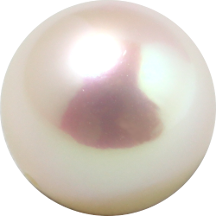
Akoya pearls are saltwater cultured pearls grown in the akoya pearl oyster, Pinctada fucata (martensii). They are an organic gem made of nacre, not a mineral. Japan and China produce them, and to a lesser extent Vietnam; most are white or cream, the colours many buyers think of as the classic pearl.
Products made with this material
Showing 1 of 1 products
Full material guide
What the material is, where it comes from or how it is made, identification and care, from the cited sources.
Properties
| Nature | Organic gem: saltwater cultured pearl (usually bead-nucleated) |
| Mollusk | Akoya pearl oyster, Pinctada fucata (martensii) |
| Composition | Nacre of calcium carbonate (CaCO₃) and protein around a shell bead nucleus |
| Mohs hardness | 2.5–3.0 (pearl) |
| Specific gravity | 2.60–2.85 (pearl) |
| Color | Mostly white to cream, often with a pinkish overtone |
| Usual processing | Virtually all are bleached; luster processing (maeshori) and pinking are routine; some are optically brightened, dyed or irradiated |
Origins & sources
Akoya pearls are cultured: a technician inserts a shell bead together with a small piece of mantle tissue into the gonad of a host oyster; the tissue forms a sac around the bead and coats it with nacre until harvest. This bead-nucleation method was developed in Japan by Tatsuhei Mise and Tokichi Nishikawa in the early 20th century. Akoya pearls are farmed mainly in Japan, to a lesser extent in China and Vietnam; the traditional product is about 6–7 mm.
Identification
A pearl's identity depends on its mollusk and growth environment, not its look. Bead-nucleated Chinese freshwater pearls sold as "Chinese akoya", "baby akoya" or "freshwater akoya" are not akoya pearls, and GIA calls these names misleading; such freshwater pearls often show a very slightly flat side, but visual checks alone are often not enough. Laboratories use X-radiography (a bead cultured pearl shows a central core and surrounding nacre) and trace elements (strontium is typically higher in saltwater pearls, manganese in freshwater pearls). Optically brightened pearls show a stronger bluish fluorescence under long-wave UV than pearls that were only bleached.
Care
Pearl has a Mohs hardness of about 2.5, so it scratches easily. High heat can burn or crack pearls, and many chemicals and all acids, including hair spray, perfume, cosmetics and even perspiration, can damage them. Never use ultrasonic or steam cleaners; wipe the pearls with a very soft, clean cloth after each wearing, use warm soapy water only for occasional cleaning, and let a strung necklace's thread dry completely before wearing it.
History
Kokichi Mikimoto successfully cultured a pearl in Japan in 1893, and he turned the bead-nucleation technique of Tatsuhei Mise and Tokichi Nishikawa into a major business; Japanese cultured pearls became commercially important in the 1920s, as natural pearl production declined. Japanese akoya output peaked in 1966 at about 148.2 tonnes. In 1996 an oyster disease killed two-thirds of the 300 million shells in Mie, and Chinese freshwater pearls began to compete with akoyas.
Cultural meanings
Pearl, natural or cultured, is a US birthstone for June and is considered the gem of the third and thirtieth wedding anniversaries. According to GIA, the round shape of some pearls led many cultures to associate pearls with the moon, and in Europe pearls symbolized modesty, chastity and purity.
Traditional beliefs
In ancient China, pearls were believed to guarantee protection from fire and fire-breathing dragons.
Collected Oct 23, 2026
- Pearl Description: The Four Major Types of Cultured Pearls GIA · Accessed Oct 23, 2026 OverviewPropertiesOrigins & sources
- Pearl (GIA Gem Encyclopedia) GIA · Accessed Oct 23, 2026 PropertiesHistoryCultural meanings
- Freshwater Akoyas - A Trending Misnomer for Certain Freshwater Pearls GIA (Phoebe Shang) · Accessed Oct 23, 2026 OverviewPropertiesOrigins & sourcesIdentification
- How GIA Analyzes Pearls from Start to Finish GIA (Phoebe Shang) · Accessed Oct 23, 2026 Identification
- Optical Whitening and Brightening of Pearls: A Fluorescence Spectroscopy Study (Gems & Gemology, Summer 2020) GIA (Chunhui Zhou et al.) · Accessed Oct 23, 2026 PropertiesIdentification
- From Single Source to Global Free Market: the Transformation of the Cultured Pearl Industry (Gems & Gemology, Fall 2007) GIA (Russell Shor) · Accessed Oct 23, 2026 PropertiesOrigins & sourcesIdentificationHistory
- Pearl Care and Cleaning Guide GIA · Accessed Oct 23, 2026 Care
- Pearl History and Lore GIA · Accessed Oct 23, 2026 HistoryCultural meaningsTraditional beliefs