Rock Crystal
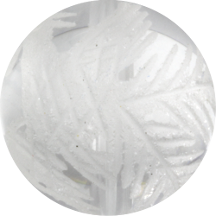
Rock crystal is the traditional name for clear, colourless quartz (silicon dioxide, SiO₂), a natural mineral. It is one variety of quartz, not a name for the whole quartz family: coloured varieties such as amethyst, citrine and rose quartz have their own names. Except for being colourless and clear, it has no property that other crystalline quartz lacks.
Products made with this material
Showing 21 of 21 products
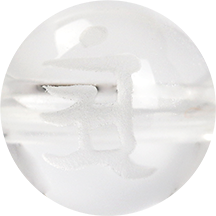
8mm / 10mm
$9.99 Available
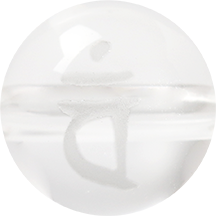
8mm / 10mm
$9.99 Available
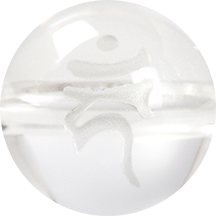
8mm / 10mm
$9.99 Available
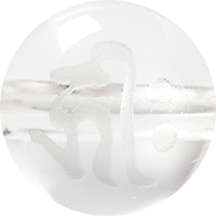
8mm / 10mm
$9.99 Available
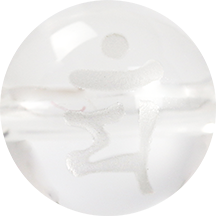
8mm / 10mm
$9.99 Available
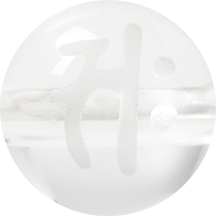
8mm / 10mm
$9.99 Available
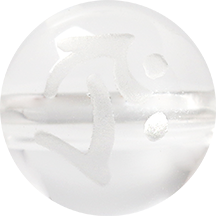
8mm / 10mm
$9.99 Available
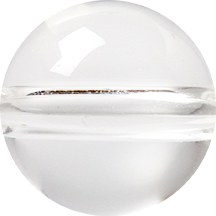
4mm / 6mm / 8mm / 10mm / 12mm
$9.99 Available
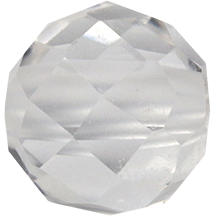
4mm
$9.99 Available
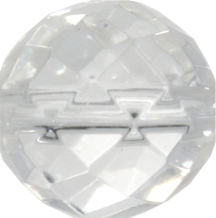
6mm / 8mm / 10mm
$9.99 Available
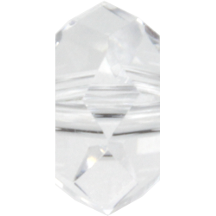
6mm / 7mm / 8mm
$9.99 Available
6mm / 8mm / 10mm
$9.99 Available
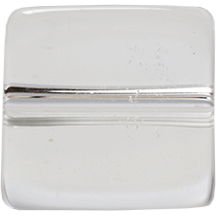
10mm
$9.99 Available
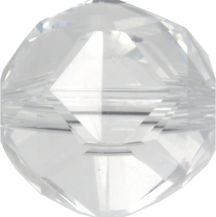
6mm / 8mm / 10mm
$9.99 Available
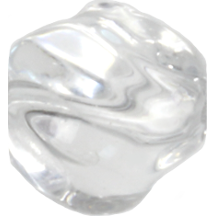
6mm / 8mm
$9.99 Available
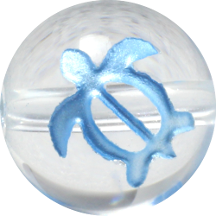
8mm / 10mm / 12mm
$9.99 Available
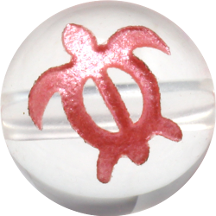
8mm / 10mm / 12mm
$9.99 Available
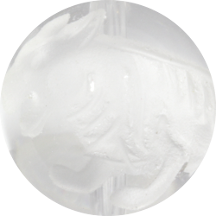
10mm / 12mm / 14mm
$9.99 Available
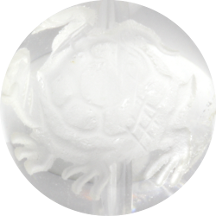
10mm / 12mm / 14mm
$9.99 Available
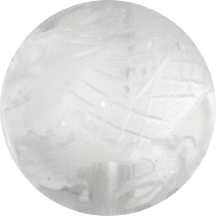
10mm / 12mm / 14mm
$9.99 Available
10mm / 12mm / 14mm
$9.99 Available
Full material guide
What the material is, where it comes from or how it is made, identification and care, from the cited sources.
Properties
| Material type | Natural mineral: colourless variety of quartz |
| Chemical formula | SiO₂ |
| Crystal system | Trigonal (six-sided prisms) |
| Color | Colourless |
| Transparency | Transparent |
| Mohs hardness | 7 |
| Specific gravity | 2.65 |
| Refractive index | 1.544 to 1.553 (uniaxial positive) |
| Birefringence | 0.009 |
| Cleavage | None or indistinct; conchoidal fracture |
| Luster | Vitreous |
Origins & sources
Rock crystal can form in any geological environment where quartz forms; large, well-formed transparent crystals come from some pegmatites, Alpine-type fissures and hydrothermal veins. It is found worldwide, but few deposits are worked commercially: the Ouachita Mountains of Arkansas and the Herkimer area of New York (USA), Minas Gerais (Brazil, currently the most important exporter), the Polar Urals (Russia), Madagascar and Nepal are among those named by The Quartz Page. Gem references also list the Swiss Alps, Japan, New South Wales (Australia), Myanmar and Canada. Arkansas is the largest US producer of gem and decorative rock crystal.
Identification
Rock crystal is identified as quartz (refractive index 1.544–1.553, birefringence 0.009, specific gravity about 2.65, hardness 7) that is colourless and transparent; it may contain many kinds of inclusions, such as two-phase fluid inclusions, rutile needles, tourmaline, actinolite or chlorite. It is used to imitate diamond, and doubly terminated crystals from Herkimer, New York, are misleadingly called "Herkimer diamonds". Treated material exists: quench-crackled and dyed stones show a web-like network of cracks, iridescent "iris" or "rainbow" quartz owes its colours to cracks, and coated stones carry an ultra-thin metallic layer (such as gold for the light-blue "Aqua Aura"). Many rock crystals can be turned into smoky quartz by irradiation, and most smoky quartz from Arkansas is irradiated rock crystal. Quartz triplets are common imitations, and synthetic rock crystal is used only industrially.
Care
With a hardness of 7 and no real cleavage, quartz is rated as having very good wearability and needs no special care instructions. It is nevertheless brittle, with a conchoidal fracture, so a hard knock can chip it. Quench-crackling weakens a stone, and some dyes can fade. Broken crystals can have razor-sharp edges, and quartz should not be ground dry because long-term exposure to fine dust can cause silicosis.
History
The word "crystal" goes back to the Greek krystallos, recorded by Theophrastus around 300 BCE; the ancients believed rock crystal was ice frozen so deeply that it could not melt again. Rock crystal has been gathered since Palaeolithic times, tools and weapons were made from it before it was used for ornament, and records show its use in decoration and jewellery for at least 4,000 years. It was made into rings, bracelets, seals, cups and carvings; in ancient Egypt it formed the cornea of inlaid stone eyes in statues. In the late 1980s and early 1990s demand from the metaphysical market accounted for 40% or more of US rock-crystal consumption, later settling at about 15–20%.
Cultural meanings
Japanese crystal retailers say that with power stones one "begins with crystal and ends with crystal". The retailer Pascle writes that crystal is said to stand for good fortune, purification, warding off evil and the fulfilment of wishes, and that it is used as an all-purpose charm; it also notes that rock crystal is sold in Japan as an April birthstone.
Traditional beliefs
Not collected yet
Collected Oct 23, 2026
- Rock Crystal: Mineral information, data and localities. Mindat.org (Hudson Institute of Mineralogy) · Accessed Oct 23, 2026 OverviewPropertiesCare
- Quartz: Mineral information, data and localities. Mindat.org (Hudson Institute of Mineralogy) · Accessed Oct 23, 2026 OverviewPropertiesHistory
- Rock Crystal gemstone information Gemdat.org (Hudson Institute of Mineralogy) · Accessed Oct 23, 2026 PropertiesIdentificationCare
- The Quartz Page: Rock Crystal The Quartz Page (A. C. Akhavan) · Accessed Oct 23, 2026 OverviewOrigins & sourcesIdentificationHistory
- Quartz Value, Price, and Jewelry Information International Gem Society (Joel E. Arem, Donald Clark, Barbara Smigel) · Accessed Oct 23, 2026 OverviewPropertiesOrigins & sourcesIdentificationCare
- Gemstones - Quartz (SP-14-95) U.S. Geological Survey · Accessed Oct 23, 2026 Origins & sourcesIdentificationHistory
- Rock crystal - CAMEO Museum of Fine Arts, Boston (CAMEO materials database) · Accessed Oct 23, 2026 OverviewPropertiesHistory
- クリスタル(本水晶)|天然石・パワーストーン通販 Pascle(パスクル) Pascle (retailer; trade claims only) · Accessed Oct 23, 2026 Cultural meanings