Shungite

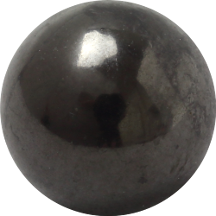
Shungite is a natural, black, carbon-rich material from Karelia in north-western Russia. It is not a crystalline mineral but a mineraloid: original shungite is non-crystalline carbon with about 98 wt% C, while the same name is also used for shungite rocks, metamorphosed ancient oil shales that contain far less carbon. Mindat treats lustrous shungite as a variety of pyrobitumen.

Products made with this material

Category
Category
Color
Color

Colors are read from each product’s main photo.

Bead diameter (mm)
Bead diameter (mm)

Only round beads with a verified diameter. A product matches when its stated size range overlaps yours, limits included; a material matches when any of its round sizes does.

Price (USD)
Price (USD)
Availability

Showing 1 of 1 products

Full material guide
Material facts

What the material is, where it comes from or how it is made, identification and care, from the cited sources.

Properties

Nature Natural mineraloid (non-crystalline carbon); the name is also used for carbon-bearing rock
Composition Original shungite: about 98 wt% carbon, with trace fullerenes (0.0001 to 0.001 %)
Structure Non-crystalline, non-graphitised; carbon occurs as globules about 10 nm across within structureless carbon
Lustre Sub-metallic
Color Black
Transparency Opaque

Origins & sources

Shungite is named after the village of Shunga on Lake Onega in the Republic of Karelia, Russia. It occurs in a sedimentary-volcanic succession about 2.0 billion years old (Palaeoproterozoic) that covers some 9,000 km² north of Lake Onega, with an estimated carbon reserve of more than 25 × 10¹⁰ tonnes. Geologists interpret the deposits as a combination of a petrified oil field, petrified organosiliceous diapirs and oil spills; the Maksovo, Zazhogino and Nigozero deposits have economic significance.

Identification

The name covers materials of very different carbon content. Lustrous shungite (originally defined at about 98 wt% C) is black, sub-metallic and opaque. Shungite-bearing rocks range from metamorphosed oil shales with less than 50 wt% C to rocks with 50–75 wt% C, and diapiric shungite rocks contain 35–75 wt% SiO₂ and only 20–55 wt% C. A piece sold as "shungite" may therefore be anything from nearly pure carbon to a silica-rich rock.

Care

Not collected yet

History & culture

History

Shungite has puzzled geologists since the 18th century. The name was introduced by Inostranzev in 1879 for a black, lustrous substance with about 98 wt% carbon occurring in veins and layers near Shunga; later classifications applied it more broadly, which has caused confusion. Some samples contain fullerenes, but according to Mindat only in trace amounts. Industrially, shungite and shungite rocks are used in metallurgy, water purification and other processes.

Cultural meanings

Not collected yet

Traditional beliefs

Not collected yet

Sources

Collected Oct 23, 2026