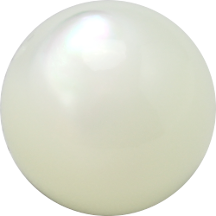
Mother-of-Pearl

Mother-of-pearl, or nacre, is an organic gem material, not a mineral: the hard, iridescent inner layer of some mollusk shells, such as pearl oysters, mussels, abalone and some snails. It is mostly aragonite (calcium carbonate) held together by the protein conchiolin, the same material that makes up nacreous pearls. Mother-of-pearl is often used in its natural colors but is also frequently dyed.

Products made with this material

Category
Category
Color
Color

Colors are read from each product’s main photo.

Bead diameter (mm)
Bead diameter (mm)

Only round beads with a verified diameter. A product matches when its stated size range overlaps yours, limits included; a material matches when any of its round sizes does.

Price (USD)
Price (USD)
Availability

Showing 1 of 1 products

Full material guide
Material facts

What the material is, where it comes from or how it is made, identification and care, from the cited sources.

Properties

Nature Organic (nacreous inner layer of mollusk shell); not a mineral
Composition Aragonite (calcium carbonate) layers bound by conchiolin
Color White, yellow, green, blue, pink or purple, depending on the mollusk species and water temperature
Mohs hardness 3.5
Density 2.65–2.78
Typical treatments Frequently dyed

Origins & sources

Mother-of-pearl lines the inside of the shells of several mollusks; the most common sources are pearl-producing oysters and mussels, and abalone is known for exceptionally strong orient, with the colorful paua varieties (Haliotis iris, H. australis and H. virginea) found mainly in New Zealand. Color varies with species and water temperature, and mollusks from warm equatorial seas tend to produce darker or brighter nacre.

Identification

Natural mother-of-pearl has a pearly luster and usually good to high iridescence; in most cases the species of shell cannot be determined. Because it is frequently dyed, check richly colored pieces under magnification for concentrations of dye. Plastic imitations feel warm, usually show mold marks and, if somewhat transparent, flow lines and gas bubbles; a hot-point test (shell smells like burning hair, plastic gives an acrid odor) is a last resort because it damages the piece. Shell reacts to acids with effervescence. Coated shell beads sold as "shell pearls" are imitation pearls, not mother-of-pearl in its natural state.

Care

Mother-of-pearl is soft (Mohs 3.5) and susceptible to damage by heat, light, humidity and chemicals; it dissolves in acids and may lose its iridescence with exposure to ultraviolet radiation. Keep it away from acids and other chemicals, and out of strong sunlight. Shell dust is harmful to breathe, so cutting or drilling should be done wet or with a dust mask.

History & culture

History

According to the Museum of Fine Arts, Boston (CAMEO), mother-of-pearl has been used for jewelry since 3000 BCE, as well as for decorative inlays, knife handles, cameos, buttons and beads. IGS notes that shells are among humanity's most ancient decorations, strung into necklaces or hung as pendants by prehistoric people.

Cultural meanings

The Japanese retailer Pascle says mother-of-pearl has long been regarded as a charm for safe childbirth and child-rearing, symbolizing fertility and prosperity, and associates it with maternal love because the shell "mothers" pearls. These are retailer-attributed beliefs, not verified effects.

Traditional beliefs

Not collected yet

Sources

Collected Oct 23, 2026