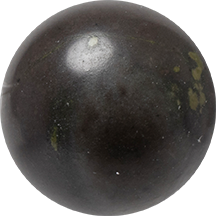
Sajigawa Stone

Sajigawa stone (Sajigawa-ishi) is a natural metamorphic rock from the Saji area of Tottori City, Tottori Prefecture: a dark, blackish-green rock derived from basaltic lava and pyroclastic rock of Paleozoic submarine volcanoes, belonging to the Sangun metamorphic belt. It is counted among Japan's three famous stones and is prized as a bonseki, garden stone and suiseki; collection has been prohibited since 1965.

Products made with this material

Category
Category
Color
Color

Colors are read from each product’s main photo.

Bead diameter (mm)
Bead diameter (mm)

Only round beads with a verified diameter. A product matches when its stated size range overlaps yours, limits included; a material matches when any of its round sizes does.

Price (USD)
Price (USD)
Availability

Showing 1 of 1 products

Full material guide
Material facts

What the material is, where it comes from or how it is made, identification and care, from the cited sources.

Properties

Nature Natural rock (metamorphic)
Original rock Basaltic lava and pyroclastic rock erupted by submarine volcanoes about 300 million years ago (Paleozoic)
Geological unit Sangun metamorphic belt (metamorphic rocks), which runs in a band from northern Kyushu to the San'in region
Color Blackish green; the prized Sajigawa makuro-ishi shines blue-black when wet

Origins & sources

The original volcanic rocks were transformed by high pressure and heat during crustal movements; the resulting rock was exposed at the surface and, over a long time, weathered and eroded into loose boulders in and along the Saji River. Because overcollection and theft spread as the stone became popular, the Governor of Tottori Prefecture ordered a total ban on collection in October 1965, and in 1984 the prefecture designated the Saji River basin a nature conservation area to protect the stone.

Identification

Sajigawa stones vary in shape and pattern; the Sajigawa-ishi enthusiasts' society classifies them into ten types: Sajigawa makuro-ishi, haiji-ishi, kumokake-ishi, itokake-ishi, hekitan-seki, tora-ishi, mon-ishi, arare-ishi, sudachi-ishi and tenpyo-seki. Of these, the makuro-ishi, which shines blue-black when wet, is considered especially valuable.

Care

Not collected yet

History & culture

History

Sajigawa stone has long been treasured as a garden stone in the Saji area. From around 1907 it became nationally famous for bonsai use; from the mid-Taisho era it was used in the gardens of large residences and inns in Tottori and Yazu and became popular in Kyoto and Osaka; and during the stone boom of the early 1960s it drew attention as a suiseki among collectors in Tokyo, Kyoto and Osaka. The Reimei-no-niwa garden behind the Saji branch office was built in 1992 to preserve and display the stone, and Sajigawa stone is used for the Inpaku-no-to memorial in Okinawa and the water basin of the Tottori Prefecture Gokoku Shrine.

Cultural meanings

Not collected yet

Traditional beliefs

Not collected yet

Sources

Collected Oct 23, 2026