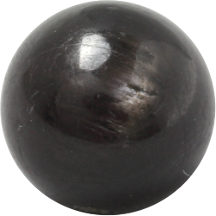
Hypersthene

Hypersthene is an old name for a natural magnesium–iron orthopyroxene midway between enstatite and ferrosilite. The International Mineralogical Association discarded the name in 1988, so it is no longer a mineral species; Mindat notes that most material called hypersthene is iron-bearing (ferroan) enstatite. The name survives in the gem and bead trade for dark stones with a metallic-looking sheen (schiller).

Products made with this material

Category
Category
Color
Color

Colors are read from each product’s main photo.

Bead diameter (mm)
Bead diameter (mm)

Only round beads with a verified diameter. A product matches when its stated size range overlaps yours, limits included; a material matches when any of its round sizes does.

Price (USD)
Price (USD)
Availability

Showing 1 of 1 products

Full material guide
Material facts

What the material is, where it comes from or how it is made, identification and care, from the cited sources.

Properties

Material type Natural mineral (orthopyroxene); obsolete name
Name status Discredited in 1988; material is enstatite or ferrosilite (mostly ferroan enstatite)
Chemical formula (Mg,Fe)SiO₃
Crystal system Orthorhombic
Color Black, black-brown or black-green; also brown, green or gray
Optical effect Copper-red to bronze metallic sheen (schiller) on certain surfaces
Mohs hardness 5 to 6
Specific gravity 3.45 to 3.55
Refractive index 1.673 to 1.731
Cleavage Distinct

Origins & sources

Orthopyroxene of this composition is a common component of igneous rocks such as pyroxenite, andesite and basalt, of charnockitic rocks and high-grade metamorphic granulites, and of some meteorites. Mindat records it from hundreds of localities, for example Wilson Lake in Labrador, Canada.

Identification

Under the 1988 pyroxene nomenclature, the enstatite–ferrosilite series has only two species, divided at the midpoint: magnesium-dominant enstatite and iron-dominant ferrosilite. Old intermediate names such as bronzite and hypersthene were dropped, so a stone sold as hypersthene can only be assigned to a species by chemical analysis. Gemdat lists a refractive index of 1.673 to 1.731 and a specific gravity of 3.45 to 3.55, higher than those of bronzite (about 1.668 and 3.35), and describes a brilliant copper-red metallic schiller on certain surfaces. Bronzite is the brown, more magnesium-rich end of the same range.

Care

Not collected yet

History & culture

History

The name comes from Greek words meaning "over strength", referring to its greater hardness than hornblende, a mineral it is often confused with. The Pyroxene Subcommittee of the International Mineralogical Association's commission on mineral names discredited it in 1988 as an unnecessary name.

Cultural meanings

Not collected yet

Traditional beliefs

Not collected yet

Sources

Collected Oct 23, 2026