Amethyst

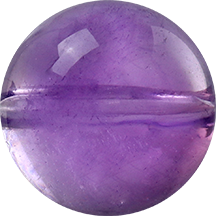
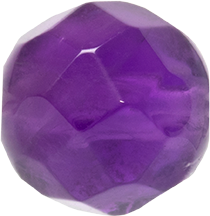
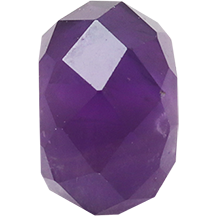
Amethyst is the purple variety of the mineral quartz. Its color ranges from light lilac to deep royal purple, and it commonly shows color zoning. It is mined and can also be grown in a laboratory.

Products made with this material

Category
Category
Shape
Shape

6 products without a confirmed shape are hidden while a shape is selected.

Color
Color

Colors are read from each product’s main photo.

Bead diameter (mm)
Bead diameter (mm)

Only round beads with a verified diameter. A product matches when its stated size range overlaps yours, limits included; a material matches when any of its round sizes does.

Price (USD)
Price (USD)

16 products without our price are hidden while a price is set.

Availability

Showing 5 of 21 products

Full material guide
Material facts

What the material is, where it comes from or how it is made, identification and care, from the cited sources.

Properties

Mineral species Quartz
Chemical formula SiO₂
Color Purple (light lilac to deep purple)
Refractive index 1.544 to 1.553
Birefringence 0.009
Specific gravity 2.66
Mohs hardness 7

Origins & sources

Russia was the major source until the 19th century, when large deposits were found in Brazil. Today the most important sources are in Africa and South America: Brazil (especially Rio Grande do Sul), the Anahí mine in Bolivia (also the source of bicolored ametrine), and the Kariba mine in Zambia. Fine dark crystals also come from the Four Peaks mine in Arizona, USA.

Identification

Amethyst typically shows angular zones of darker and lighter purple (color zoning). Its gemological constants (refractive index 1.544–1.553, birefringence 0.009, specific gravity 2.66) are those of quartz. Lab-grown amethyst has the same chemical and physical properties, so separating natural from synthetic material can require advanced laboratory testing.

Heat treatment is common: it can lighten very dark material, remove brownish tones, or turn some amethyst yellow (citrine).

Care

With a Mohs hardness of 7 it suits daily wear, but it can show wear over time and may be scratched by harder gems such as ruby, sapphire or diamond, so store it separately. Some amethyst fades with prolonged exposure to strong light, and excessive heat can remove the color. Clean with a soft brush and mild soapy water (safest); ultrasonic cleaning is possible, steam cleaning is not recommended.

History & culture

History

Amethyst was valued like ruby and emerald until the 19th century, when Brazil's large deposits made it plentiful. Fine amethysts have long been set in religious jewelry and royal regalia, including British coronation regalia, and it is worn on bishops' rings. Catherine the Great of Russia favored the gem, and Wallis, Duchess of Windsor, wore a Cartier amethyst bib necklace at Versailles in 1953.

Cultural meanings

Amethyst is the birthstone for February and the traditional gem for the 6th and 17th wedding anniversaries. It is also counted among the emblems of the twelve apostles. The name comes from the ancient Greek amethystos, "not drunk".

Traditional beliefs

In ancient Greek legend the gem was associated with Dionysus (Bacchus to the Romans), and it was believed that wearing amethyst prevented drunkenness. Other legends held that it kept the wearer clear-headed and quick-witted in battle and business. Renaissance Europeans believed it calmed lovers overrun by passion, and the astrologer Camillo Leonardi wrote that it quickened intelligence. Legend also says St. Valentine wore an amethyst ring carved with Cupid. These are historical beliefs, not established properties.

Sources

Collected Oct 22, 2026