


Freshwater Pearl
Freshwater pearls on today's market are cultured pearls grown in freshwater mussels in lakes and ponds, mainly Hyriopsis cumingii (and hybrids) in China, the leading source. They are an organic gem made of nacre, not a mineral, and are the most commonly produced and most affordable pearl type, valued for their wide range of sizes, shapes and colours.
Products made with this material
Showing 2 of 2 products
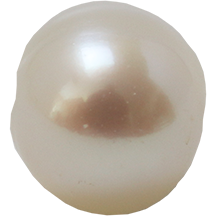
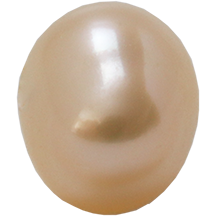
Full material guide
What the material is, where it comes from or how it is made, identification and care, from the cited sources.
Properties
| Nature | Organic gem: freshwater cultured pearl (usually tissue-nucleated, without a bead) |
| Mollusk | Mainly the freshwater mussel Hyriopsis cumingii and its hybrids |
| Composition | Nacre of calcium carbonate (CaCO₃) and protein |
| Mohs hardness | 2.5–3.0 (pearl) |
| Specific gravity | 2.60–2.85 (pearl) |
| Color | Mostly white or off-white; also pink, peach and lavender; many bright colours are dyed |
| Treatments | Routinely bleached; many are dyed or irradiated |
Origins & sources
Freshwater pearls are cultured mainly in lakes and ponds in China, often with many pearls grown in one mussel. Most Chinese farmers implant only pieces of mantle tissue, without a bead, which mainly yields baroque and other irregular shapes and occasionally rounds. Newer Chinese production also uses shell-bead nucleation, giving small near-round to round pearls that resemble akoya pearls.
Identification
Bead-nucleated freshwater pearls can look like saltwater akoya pearls, but names such as "Chinese akoya", "baby akoya" or "freshwater akoya" are incorrect according to GIA: they are freshwater pearls. Such pearls often show a very slightly flat side, but visual checks alone are often not enough. Laboratories separate freshwater from saltwater pearls by trace elements (manganese is typically higher in freshwater pearls, strontium in saltwater pearls) and by X-ray fluorescence imaging, under which freshwater pearls often glow moderately to strongly greenish yellow. Unnaturally bright colours usually indicate dye.
Care
Pearl has a Mohs hardness of about 2.5, so it scratches easily. High heat can burn or crack pearls, and many chemicals and all acids, including hair spray, perfume, cosmetics and even perspiration, can damage them. Dyed pearl colours can change over time. Never use ultrasonic or steam cleaners; wipe the pearls with a very soft, clean cloth after each wearing, use warm soapy water only for occasional cleaning, and let a strung necklace's thread dry completely before wearing it.
History
Chinese rivers and lakes were among the outstanding sources of natural pearls before 1492, and the first steps toward pearl culturing occurred hundreds of years ago in China. In the early 1990s, Chinese freshwater pearl culturing was still in its infancy for higher-quality goods; by the mid-1990s the best Chinese freshwater pearls, now produced as 6–7 mm semi-rounds, began to rival mid-range akoya pearls.
Cultural meanings
Pearl, natural or cultured, is a US birthstone for June and is considered the gem of the third and thirtieth wedding anniversaries. According to GIA, pearls have always been associated with the mystery and life-sustaining nature of water, and in Europe they symbolized modesty, chastity and purity.
Traditional beliefs
In ancient China, pearls were believed to guarantee protection from fire and fire-breathing dragons.
Collected Oct 23, 2026
- Pearl Description: The Four Major Types of Cultured Pearls GIA · Accessed Oct 23, 2026 OverviewOrigins & sources
- Pearl (GIA Gem Encyclopedia) GIA · Accessed Oct 23, 2026 PropertiesCultural meanings
- Freshwater Akoyas - A Trending Misnomer for Certain Freshwater Pearls GIA (Phoebe Shang) · Accessed Oct 23, 2026 OverviewPropertiesOrigins & sourcesIdentification
- How GIA Analyzes Pearls from Start to Finish GIA (Phoebe Shang) · Accessed Oct 23, 2026 Identification
- From Single Source to Global Free Market: the Transformation of the Cultured Pearl Industry (Gems & Gemology, Fall 2007) GIA (Russell Shor) · Accessed Oct 23, 2026 PropertiesOrigins & sourcesIdentificationHistory
- An Introduction to Gem Treatments GIA (Robert Weldon) · Accessed Oct 23, 2026 Properties
- Pearl Care and Cleaning Guide GIA · Accessed Oct 23, 2026 Care
- Pearl History and Lore GIA · Accessed Oct 23, 2026 HistoryCultural meaningsTraditional beliefs