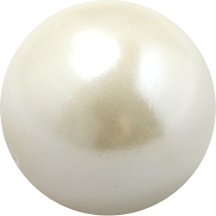
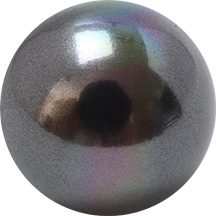
Shell Pearl

"Shell pearl" is a man-made imitation pearl, not a natural or cultured pearl: a bead cut from mollusk shell is coated with an artificial pearly layer to look like a pearl. GIA considers the name misleading; under CIBJO rules such products must be called "imitation" or "simulated" pearls.

Products made with this material

Category
Category
Color
Color

Colors are read from each product’s main photo.

Bead diameter (mm)
Bead diameter (mm)

Only round beads with a verified diameter. A product matches when its stated size range overlaps yours, limits included; a material matches when any of its round sizes does.

Price (USD)
Price (USD)
Availability

Showing 2 of 2 products

Full material guide
Material facts

What the material is, where it comes from or how it is made, identification and care, from the cited sources.

Properties

Nature Man-made imitation pearl (coated shell bead)
Composition Core: saltwater shell bead (aragonite), in some cases giant clam (Tridacna) shell; surface: thin artificial coating
Color Made in many colors, including white, black and golden, to imitate different cultured pearls

Origins & sources

Shell pearls are manufactured. Beads are fashioned from mollusk shell and then coated with artificial materials chosen to imitate many kinds of natural and cultured pearls, such as Tahitian black and white or golden South Sea pearls. GIA analyses found beads made of saltwater shell, in some cases most likely from giant clams (Tridacna), which are protected under CITES Appendix II; GIA has urged manufacturers to stop using Tridacna shell for this purpose.

Identification

Shell pearls can match cultured pearls in appearance and heft, so look closely. Under magnification the surface shows a glittery coating with minute sparkling particles instead of the overlapping nacre platelets of a nacreous pearl, and the orient can look multicolored but oily. Near drill holes the very thin coating often chips or peels, exposing white shell underneath. In laboratory tests, X-radiography shows only the inner shell bead (sometimes with parallel banding), and the coating has contained bismuth, which does not normally occur in pearls.

Care

The pearly look is only a thin surface coating. GIA removed it from one sample simply by immersing it in acetone, and observed chipping and peeling near drill holes, so keep shell pearls away from solvents such as acetone and from hard or abrasive objects, and store them wrapped in soft material in a dry place.

History & culture

History

Not collected yet

Cultural meanings

Not collected yet

Traditional beliefs

Not collected yet

Sources

Collected Oct 23, 2026