Itoigawa Jade

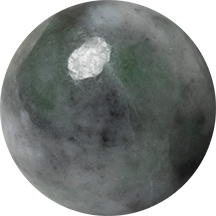
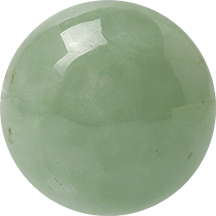
Itoigawa jade is natural jadeite jade (jadeitite, a rock made mostly of the mineral jadeite) from Itoigawa City, Niigata Prefecture, Japan's largest jade source. It formed about 520 million years ago and is described locally as the world's oldest jade. In 2016 the Japanese Association of Mineralogical Sciences chose jade (jadeite and jadeitite) as Japan's national stone; Itoigawa is the locality where gem-quality material is abundant.

Products made with this material

Category
Category
Color
Color

Colors are read from each product’s main photo.

Bead diameter (mm)
Bead diameter (mm)

Only round beads with a verified diameter. A product matches when its stated size range overlaps yours, limits included; a material matches when any of its round sizes does.

Price (USD)
Price (USD)
Availability

Showing 2 of 2 products

Full material guide
Material facts

What the material is, where it comes from or how it is made, identification and care, from the cited sources.

Properties

Nature Natural rock (jadeitite, a metamorphic rock)
Main minerals Mostly jadeite; deep green parts are close to omphacite in composition
Accompanying minerals May contain albite, prehnite, analcime, pectolite, titanite and zircon; does not contain quartz
Color White, green, lavender, blue and black (green is best known); orange to red-orange jade has not been found in Japan
Cause of color White: nearly pure jadeite; green: traces of iron and chromium; lavender: titanium in jadeite; blue: titanium and iron in omphacite; black: graphite
Age About 520 million years

Origins & sources

Itoigawa and its surroundings (Asahi, Otari and Hakuba) are Japan's largest jade source. Jade boulders are exposed in the Kotaki River and Omi River jade gorges, both designated and protected as natural monuments, and with luck visitors can still find jade among the pebbles on Itoigawa's gravel beaches. Jade, which forms only in subduction zones like Japan's, is also found at other Japanese localities such as Wakasa in Tottori, Oya in Hyogo, Osa in Okayama and Nagasaki, but gem-quality jade is abundant only at Itoigawa.

Identification

Unlike single-crystal gems, jade is an aggregate of minerals. The Fossa Magna Museum uses the name jade (hisui) for rock made mostly of jadeite or omphacite, and calls dense rock made mostly of tremolite–actinolite nephrite; in the West the two are still confused and even serpentinite is sometimes labelled jade. A stone formerly sold in Itoigawa as "pink jade" is not jade but rodingite containing pink clinozoisite (thulite).

Care

Not collected yet

History & culture

History

People in Itoigawa began working jade in the Jomon period, about 5,000–5,500 years ago, making large beads (taishu) and magatama that were traded across Japan; local sources call this the world's oldest jade culture. Jade remained treasured through the Yayoi and Kofun periods but fell out of use from the Nara period, and its Japanese source was forgotten. Itō Eizō found green stones in the Kotaki River area in the 1930s (traditionally dated 1938, though the Fossa Magna Museum considers 1935 likely), and in 1939 Kawano Yoshinori of Tohoku University confirmed them as jade. In 2016 the Japanese Association of Mineralogical Sciences selected jade as Japan's national stone.

Cultural meanings

Not collected yet

Traditional beliefs

According to local tradition, Princess Nunakawa, who once ruled the Itoigawa region, wore a jade magatama; this story prompted the writer Sōma Gyofū to suggest that jade might be found locally, which led to its rediscovery.

Sources

Collected Oct 23, 2026