Iolite

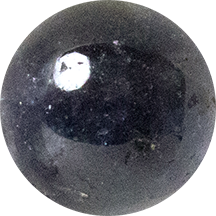
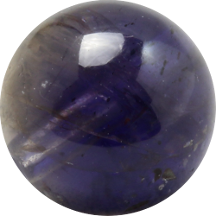
Iolite is the trade name for gem-quality, violet-blue cordierite, a natural magnesium-aluminium silicate mineral (Mg₂Al₄Si₅O₁₈) named after the French geologist Pierre Louis Antoine Cordier. It is known for strong pleochroism: turned in different directions, one stone can look violet-blue, pale blue-gray or almost colorless to yellow. Other recorded names include dichroite and the misleading "water sapphire"; iolite is not a sapphire.

Products made with this material

Category
Category
Color
Color

Colors are read from each product’s main photo.

Bead diameter (mm)
Bead diameter (mm)

Only round beads with a verified diameter. A product matches when its stated size range overlaps yours, limits included; a material matches when any of its round sizes does.

Price (USD)
Price (USD)
Availability

Showing 2 of 2 products

Full material guide
Material facts

What the material is, where it comes from or how it is made, identification and care, from the cited sources.

Properties

Nature Natural mineral (gem variety of cordierite)
Chemical formula Mg₂Al₄Si₅O₁₈ (iron can replace part of the magnesium)
Color Violetish blue to blue; also gray or near colorless; color is due to iron
Crystal system Orthorhombic
Refractive index 1.542 to 1.551 (GIA); wider range 1.522 to 1.578 reported
Specific gravity About 2.61 (range 2.53 to 2.78)
Mohs hardness 7 to 7.5
Cleavage Distinct in one direction
Pleochroism Strong; three colors in three crystal directions
Luster Vitreous

Origins & sources

Cordierite forms in thermally metamorphosed clay-rich sedimentary rocks, in high-grade schists, gneisses and granulites, and also in some igneous rocks. Because iolite is fairly hard it is often found in alluvial deposits, such as the gem gravels of Sri Lanka. Most iolite in world commerce comes from India; other sources include Tanzania, Kenya, Brazil, Norway and Madagascar, where a significant deposit was discovered in 1994.

Identification

The most useful sign is eye-visible pleochroism: a bluish iolite can look blue-gray, dark violet, or colorless to yellow depending on the viewing direction, and a violet one can look brownish from some angles. Its refractive index (about 1.54–1.55) and specific gravity (about 2.61) fit cordierite. Iolite is rarely if ever treated, because heating cannot improve its color, so its color can normally be taken as natural. The name "water sapphire" is incorrect.

Care

With a Mohs hardness of 7 to 7.5 iolite resists scratching well, but its distinct cleavage in one direction gives it only fair toughness, so it can break from a hard knock, especially in rings. Do not clean it in an ultrasonic cleaner; GIA lists iolite among gems sensitive to heat and temperature changes. Warm water, mild soap and a soft brush are the safest cleaning method.

History & culture

History

Cordierite was named after Pierre Louis Antoine Cordier (1777–1861), the French mining engineer and geologist who first studied it; the trade name iolite comes from the Greek "ios", violet. According to legend, iolite is the "Viking compass stone": thin slices are said to have served Viking navigators as polarizing filters to locate the sun on cloudy days. GIA notes that whether this is true is unknown. Iolite is often cited as the gemstone for the 21st wedding anniversary.

Cultural meanings

Some people believe that iolite aids sleep and helps unlock creativity, as GIA reports; these are beliefs, not tested properties.

Traditional beliefs

Not collected yet

Sources

Collected Oct 23, 2026