


Pink Opal
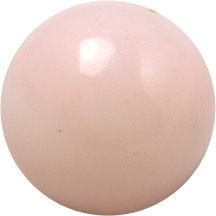
Pink opal is a natural, opaque to translucent pink common opal: it shows no play-of-color. The best-known material comes from the Acari area of Arequipa, Peru, where studies found that most pink samples are opal-CT containing the fibrous clay mineral palygorskite, which is linked to the pink color. Similar palygorskite-bearing pink opal is also known from Mexico.
Products made with this material
Showing 1 of 1 products
Full material guide
What the material is, where it comes from or how it is made, identification and care, from the cited sources.
Properties
| Nature | Natural mineraloid: common opal without play-of-color |
| Mineral | Opal (hydrated silica) |
| Chemical formula | SiO₂·nH₂O |
| Composition | Opal-CT with 10 to 40% palygorskite (pink opals from Mexico and Peru); some pale pink Peruvian opal is opal-C without palygorskite |
| Color | Pale pink to pink and dark pink, sometimes veined |
| Specific gravity | 2.07 to 2.37 (pink samples from Acari, Peru) |
| Mohs hardness | 5.5 to 6.5 (opal in general) |
Origins & sources
Peru is known for pastel pink common opal, mainly from the Andes, and it is often cut into beads and cabochons. Studied material comes from the Acari mining area near Arequipa. Translucent pink opal also occurs in Mexico (Mapimí in Durango and Michoacán), and pink common opal is reported from Western Australia and Oregon. Fritsch and co-authors suggest that the opal-CT, palygorskite and organic pigment association points to a former lake environment in a volcanic region.
Identification
Pink opal has the low refractive index and specific gravity of opal and no play-of-color. In Peruvian samples, palygorskite-bearing pink opal-CT has a greasy to waxy luster and splintery fracture, while palygorskite-free pale pink opal-C has a duller, porcelain-like luster and conchoidal fracture. The color has been attributed to an absorption near 500 nm linked to fossil organic quinone pigments held by the palygorskite fibers. Chalcedony is harder (Mohs 6.5 to 7) and denser (2.58 to 2.62) than opal. CIBJO notes that some opal on the market, including pink Ethiopian opal, is dyed.
Care
Opal is fairly soft and brittle and contains water, so it may crack after sudden or extreme changes in temperature or humidity. CIBJO advises protecting opal from abrasion, thermal shock and harsh chemicals, keeping it away from direct sunlight and other heat sources, and cleaning it with a damp cloth only; ultrasonic cleaners should not be used.
History
Not collected yet
Cultural meanings
The Japanese retailer Pascle gives pink opal the meanings it associates with opal in general, saying it is traditionally believed to encourage creativity, and also links it with expressing feminine charm and with love. Pascle lists it among October birthstones in Japan. These are retail traditions, not verified properties.
Traditional beliefs
Not collected yet
Collected Oct 23, 2026
- Relationship between nanostructure and optical absorption in fibrous pink opals from Mexico and Peru (Fritsch et al. 2004, abstract) European Journal of Mineralogy · Accessed Oct 23, 2026 OverviewPropertiesOrigins & sourcesIdentification
- Opals: characterization, nomenclature definition and proposal of a new varieties classification following the discovery of new materials in Peru (Ghisoli 2008) Scientifica Acta, Università di Pavia · Accessed Oct 23, 2026 OverviewPropertiesOrigins & sourcesIdentification
- Common Opal Can Be Pink, Blue, Green, Yellow, Purple, Orange Geology.com (Hobart M. King) · Accessed Oct 23, 2026 OverviewOrigins & sourcesIdentification
- CIBJO Guides Opal CIBJO Coloured Stone Commission · Accessed Oct 23, 2026 Origins & sourcesIdentificationCare
- Opal Australian Museum · Accessed Oct 23, 2026 PropertiesCare
- Opal: Mineral information, data and localities Mindat · Accessed Oct 23, 2026 Properties
- ピンクオパール Pascle (Japanese retailer; trade claims) · Accessed Oct 23, 2026 Cultural meaningsCare