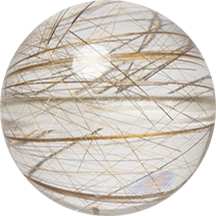
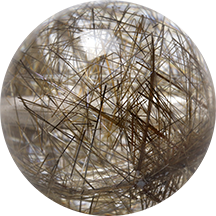
Silver Rutilated Quartz

Silver rutilated quartz is a trade colour name for natural quartz containing silvery grey needles. GIA notes that rutile in quartz is typically golden but can occasionally be silvery grey, and a Chinese study found that the inclusions in market "silver hair crystal" were rutile. The name describes colour only, so the needles in an individual piece still need testing to be identified.

Products made with this material

Category
Category
Color
Color

Colors are read from each product’s main photo.

Bead diameter (mm)
Bead diameter (mm)

Only round beads with a verified diameter. A product matches when its stated size range overlaps yours, limits included; a material matches when any of its round sizes does.

Price (USD)
Price (USD)
Availability

Showing 2 of 2 products

Full material guide
Material facts

What the material is, where it comes from or how it is made, identification and care, from the cited sources.

Properties

Material type Natural mineral: quartz with mineral inclusions (not a separate species)
Inclusions Silvery grey needles, usually rutile (TiO₂)
Host mineral Quartz, SiO₂ (usually colourless rock crystal)
Mohs hardness (quartz host) 7
Specific gravity (quartz host) 2.65
Refractive index (quartz host) 1.544 to 1.553

Origins & sources

GIA has described a deposit in El Dorado County, California, where almost half of more than 1,000 quartz crystals from one pocket contained star-like tufts of silvery grey rutile. Grey rutile also occurs in quartz from Currelo, Minas Gerais, Brazil, sold as "platinum quartz". The sources of commercial beads are not documented.

Identification

GIA identified the silvery grey needles in the California quartz as rutile by Raman spectroscopy; such grey rutile may be overgrown on a core of anatase or brookite, other forms of titanium dioxide. Gemdat also lists silvery among the colours of rutile needles in quartz. Rutile shows its strongest Raman peaks near 445 and 600 cm⁻¹.

Care

The host is quartz, with a Mohs hardness of 7. JCK advises washing off dust before wiping the stone with a cloth, because dust of similar hardness can leave fine scratches that gradually dull the polish. The International Gem Society lists no special care instructions and no heat sensitivity for quartz.

History & culture

History

Not collected yet

Cultural meanings

Not collected yet

Traditional beliefs

Not collected yet

Sources

Collected Oct 23, 2026