Super Seven

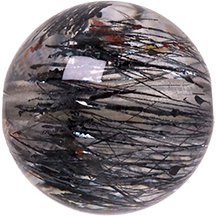
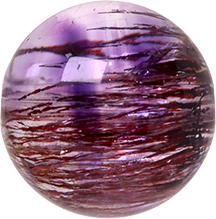
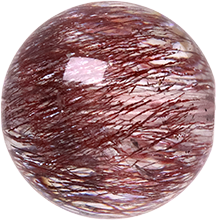
Super Seven (also sold as Sacred Seven or Melody Stone) is a trade name, not a mineral name, for natural quartz, mostly amethyst and smoky quartz, that contains inclusions of other minerals. Sellers claim it holds seven minerals: amethyst, clear quartz, smoky quartz, rutile, goethite, lepidocrocite and cacoxenite. Three of these are colour varieties of quartz itself, and Mindat managers report that pieces on sale never showed all seven and that the "cacoxenite" and "lepidocrocite" were often really goethite and hematite.

Products made with this material

Category
Category
Color
Color

Colors are read from each product’s main photo.

Bead diameter (mm)
Bead diameter (mm)

Only round beads with a verified diameter. A product matches when its stated size range overlaps yours, limits included; a material matches when any of its round sizes does.

Price (USD)
Price (USD)
Availability

Showing 3 of 3 products

Full material guide
Material facts

What the material is, where it comes from or how it is made, identification and care, from the cited sources.

Properties

Nature Natural material: quartz with mineral inclusions sold under a trade name (no mineralogical definition)
Claimed composition (trade) Amethyst, clear quartz, smoky quartz, rutile, goethite, lepidocrocite and cacoxenite
Inclusions reported by mineralogists Iron minerals such as goethite and hematite; claimed cacoxenite and lepidocrocite are often misidentified
Host mineral Quartz, SiO₂
Crystal system Trigonal (quartz)
Mohs hardness 7 (quartz host)
Specific gravity 2.65 to 2.66 (quartz)
Refractive index 1.544 to 1.553 (quartz)

Origins & sources

Trade descriptions say the material comes only from Espírito Santo, Brazil, from a mine that has since closed; a seller text quoted on Mindat in 2003 made this claim, and the retailer Pascle repeats the Espírito Santo origin. Pascle adds that similar-looking stones now come from many places and are sold under the same name, listing Brazil, Madagascar and India. Mindat contributors described the material as Brazilian amethyst.

Identification

There is no mineralogical definition of Super Seven, so the name itself cannot be confirmed by testing; what can be tested is the quartz host (hardness 7, refractive index 1.544 to 1.553) and the individual inclusions. According to Mindat manager Alfredo Petrov, the examples he saw on sale never had all seven claimed constituents, the "cacoxenite" was really goethite and the "lepidocrocite" was hematite. The Quartz Page likewise reports that red inclusions in amethyst once called lepidocrocite have been found to be hematite. Mindat founder Jolyon Ralph called the name a marketing term and identified one specimen offered as Super Seven as parallel-growth smoky amethyst quartz.

Care

IGS lists no special care instructions for quartz. The retailer Pascle advises wiping pieces with a soft cloth after wear and not storing them in direct sunlight for long periods, because the purple of amethyst can fade in strong light.

History & culture

History

The names Super Seven and Melody Stone were already in trade use by 2003, when Mindat members discussed a seller description of the stone as a combination of seven minerals found only in Espírito Santo, Brazil. The retailer Pascle states that the name began with the crystal author known as Melody, who introduced and named such crystals from a Brazilian mine in her writing, and that the original mine is said to have stopped producing.

Cultural meanings

Retailers present Super Seven as a symbol of harmony and unity: Pascle says it is regarded as representing "harmony" and "integration" and is kept as a charm for bonds between people, while stating that these meanings are not scientifically proven. According to a seller text quoted on Mindat, it was said to enhance psychic abilities; Mindat contributors dismissed such claims as marketing.

Traditional beliefs

Not collected yet

Sources

Collected Oct 23, 2026