Santa Maria Aquamarine
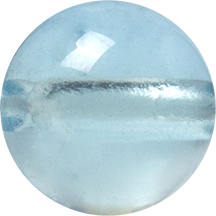
Santa Maria aquamarine is a trade name for aquamarine (blue beryl, a natural mineral) of a rare, medium-dark, highly saturated blue. The name comes from the Santa Maria de Itabira mine in Minas Gerais, Brazil, which is now nearly exhausted; today the trade uses it mainly for a colour rather than a locality, including stones from African deposits. It is not a separate mineral species.
Products made with this material
Showing 1 of 1 products
Full material guide
What the material is, where it comes from or how it is made, identification and care, from the cited sources.
Properties
| Nature | Natural mineral; trade colour grade of aquamarine |
| Mineral species | Beryl (variety aquamarine) |
| Chemical formula | Be₃Al₂Si₆O₁₈ + Fe |
| Color | Medium-dark, highly saturated blue without brown or yellow tints |
| Crystal system | Hexagonal |
| Refractive index | 1.567 to 1.590 |
| Specific gravity | 2.66 to 2.80 |
| Mohs hardness | 7.5 to 8 |
Origins & sources
The name originated with aquamarine from the Santa Maria de Itabira mine in Minas Gerais, Brazil; aquamarine in general forms in granitic rocks, especially granite pegmatites. That mine is now nearly exhausted. Since the 1970s most stones sold as Santa Maria have been either older Brazilian gems returning to the trade or gems from more recent deposits in Africa, such as Mozambique, Madagascar and Nigeria.
Identification
"Santa Maria" describes colour, not a separate material: gemological testing identifies the stone as aquamarine, and a seller's use of the name does not prove Brazilian origin. In 2022 the Asian Institute of Gemological Sciences (AIGS) introduced a colour code that applies the name to blue aquamarine of medium saturation without brown or yellow tints, regardless of origin; stones with low saturation, low clarity or dark tones do not qualify. Pure blue aquamarine is commonly heat treated to remove a green tint, a treatment considered undetectable, and other beryls may be irradiated to imitate aquamarine colour.
Care
Inclusions in aquamarine may not tolerate ultrasonic or steam cleaning, which can increase the risk of shattering, so have a gemologist check a stone before using these methods. A soft brush, mild detergent and warm water are always safe.
History
The trade has long valued the saturated blue aquamarine of the Santa Maria de Itabira mine as among the finest aquamarine colours, and the mine's name became a colour term. As production declined, the name was increasingly applied to stones from other sources and to material that falls short of the original quality, which led AIGS to publish a colour standard for the label in 2022.
Cultural meanings
Not collected yet
Traditional beliefs
Not collected yet
Collected Oct 23, 2026
- Aquamarine Value, Price, and Jewelry Information International Gem Society · Accessed Oct 23, 2026 OverviewPropertiesIdentificationCareOrigins & sources
- Aquamarine Sources International Gem Society · Accessed Oct 23, 2026 OverviewOrigins & sourcesIdentification
- Gem Focus – October 2024 – Featuring 'Santa Maria' Aquamarine Gemworld International (GemGuide) · Accessed Oct 23, 2026 OverviewPropertiesOrigins & sourcesIdentificationHistory
- AIGS Launches Grading Report for 'Santa Maria' Aquamarine National Jeweler · Accessed Oct 23, 2026 OverviewPropertiesIdentificationHistory
- Aquamarine Description GIA · Accessed Oct 23, 2026 OverviewIdentification
