


Jet
Jet is an organic gem, not a mineral: a black, coal-like rock (a form of lignite) formed from fossilized wood. Individual pieces of wood sank into water, were buried in organic-rich sediment and were coalified, giving a tougher, more uniform material than seam coal that can be carved and polished to a bright luster. It is light in weight, leaves a brown streak and has been heavily imitated by glass and plastics.
Products made with this material
Showing 1 of 1 products
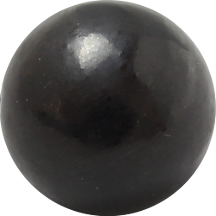
Full material guide
What the material is, where it comes from or how it is made, identification and care, from the cited sources.
Properties
| Nature | Organic gem; coal-like sedimentary rock (lignite) from fossilized wood; not a mineral |
| Composition | Variable, carbon-rich (carbon plus impurities) |
| Color | Black, brownish |
| Streak | Brown |
| Mohs hardness | 2.5–4 |
| Specific gravity | About 1.2–1.4 |
| Refractive index | 1.66 (blurred shadow edge) |
| Transparency | Opaque |
Origins & sources
The classic source is the Whitby area of the North York Moors coast in England, where jet occurs as thin seams or nodules in the Jet Rock of the Upper Lias; Whitby jet was deposited about 180 million years ago, and Whitby Museum notes the original wood came from trees similar to the modern monkey puzzle (Araucaria). Hard jet is associated with shales deposited in salt water, soft jet with freshwater deposits. Spain (Asturias) produces a harder but more brittle jet; other sources include Aude in France, Germany, Poland, Russia, Turkey, India, China and Utah, Colorado and New Mexico in the United States.
Identification
Jet is light, warm to the touch (it conducts heat poorly) and leaves a brown streak on unglazed porcelain; under magnification it can show preserved woody cell structure. Imitations include black glass (popular in the 19th century as "French jet" and cooler to the touch than jet), plastics, vulcanite or ebonite, Bakelite, gutta-percha, epoxy resins, coal and black cubic zirconia, while obsidian, black tourmaline and chalcedony can be confused with it. Most imitations give no brown streak, though vulcanite and ebonite do; molded rounded edges instead of carved sharp ones, or fading to khaki in sunlight, indicate an imitation. Whitby Museum warns against the hot-needle test: it damages the piece, is unreliable because coals and many simulants smell alike, and is dangerous near celluloid.
Care
Jet is relatively soft and brittle, so rings and pieces for frequent wear need protective settings. Store it separately, ideally wrapped in tissue paper, so harder jewelry cannot scratch it. Avoid ultrasonic and steam cleaners; wash with mild detergent and warm water using a soft brush or moistened cotton swabs, let it dry, and Whitby Museum suggests restoring the shine by gently wiping with baby oil.
History
Whitby Museum dates the earliest known jet object, found in Germany, to about 10,000 BC and its use in jewelry to about 1400 BC. Geology.com notes Neolithic and Bronze Age jet necklaces in France and Britain, and that under Roman rule Whitby jet was taken to York to be made into jewelry, sold with stories that it had protective and healing properties. The name comes from the Greek lithos gagates, "stone of Gagas", a town in Asia Minor. Jet reached its peak after Prince Albert died in 1861 and Queen Victoria wore it as mourning jewelry; by 1873 about 1,500 people worked in the Whitby industry, which declined in the 1920s.
Cultural meanings
In the 1st century AD Pliny ascribed medicinal properties to jet, according to Whitby Museum, and geology.com notes that Roman-era stories led people to wear jet amulets for protection or good fortune. The Japanese retailer Pascle describes jet as traditionally believed to ward off evil and to guard travelers. These are historical and retailer-attributed beliefs, not verified effects.
Traditional beliefs
Not collected yet
Collected Oct 23, 2026
- Whitby Jet: A Black Organic Gem, A Rock Similar to Coal Geology.com (Hobart M. King) · Accessed Oct 23, 2026 OverviewPropertiesOrigins & sourcesIdentificationHistoryCultural meanings
- Jet FAQ Whitby Museum · Accessed Oct 23, 2026 OverviewPropertiesOrigins & sourcesIdentificationCareHistoryCultural meanings
- Jet Value, Price, and Jewelry Information International Gem Society (Joel E. Arem) · Accessed Oct 23, 2026 OverviewPropertiesOrigins & sourcesIdentificationCare
- ジェット(Jet) Pascle (Japanese retailer; trade claim) · Accessed Oct 23, 2026 Cultural meanings