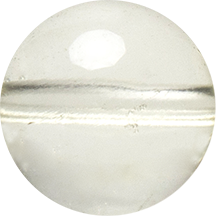
Libyan Desert Glass

Libyan Desert Glass is a pale yellow to yellow-green natural glass of almost pure silica (about 98% SiO₂), found in the Great Sand Sea of western Egypt near the Libyan border. It formed about 28.5–29 million years ago from melted quartz-rich sand; recent studies point to a meteorite impact, though an airburst origin has also been argued and no source crater has been identified. It is an impact glass, often grouped with tektites, and is not a mineral or a meteorite.

Products made with this material

Category
Category
Color
Color

Colors are read from each product’s main photo.

Bead diameter (mm)
Bead diameter (mm)

Only round beads with a verified diameter. A product matches when its stated size range overlaps yours, limits included; a material matches when any of its round sizes does.

Price (USD)
Price (USD)
Availability

Showing 1 of 1 products

Full material guide
Material facts

What the material is, where it comes from or how it is made, identification and care, from the cited sources.

Properties

Nature Natural impact glass (not a mineral, not a meteorite)
Composition Nearly pure silica glass, about 98% SiO₂
Structure Amorphous (glass)
Color Canary yellow, greenish yellow to straw yellow, sometimes whitish; often banded
Density About 2.2 g/cm³
Age About 28.5–29 million years

Origins & sources

The glass lies as centimetre- to decimetre-sized, strongly wind-eroded pieces on the floor of corridors between sand dunes in the southwestern Great Sand Sea of western Egypt, near the Libyan border. Melting nearly pure silica requires temperatures above 1,600 °C. Its origin has long been debated between a meteorite impact and the heat of a large airburst. Evidence for an impact includes lechatelierite, baddeleyite and zirconia formed from zircon, a meteoritic component in some samples, traces of former reidite in zircon (Cavosie and colleagues, 2019), shocked quartz in local bedrock (Koeberl and Ferrière, 2019) and a high-pressure zirconia phase (Kovaleva and colleagues, 2024). The source crater has not been found; it may have been almost completely eroded.

Identification

Libyan Desert Glass is distinguished from other natural glasses by its very high silica content (about 98%, compared with about 68–82% in most tektites), its low density of about 2.2 g/cm³ and its pale yellow colour. Inside, it can show bubbles, colour bands linked to differences in bubble content, schlieren, and inclusions such as cristobalite and partly digested minerals including lechatelierite and baddeleyite. Rough pieces are irregular, wind-polished lumps rather than the splash shapes typical of many tektites.

Care

Not collected yet

History & culture

History

The carved yellow scarab at the centre of a pectoral (breastplate) from the tomb of Tutankhamun, now in the Egyptian Museum in Cairo, is made of Libyan Desert Glass; Italian researcher Vincenzo de Michele noticed the resemblance in 1996, and a simple optical measurement confirmed the match in 1998. British explorers first reached the glass field in the early 1930s, and the glass was scientifically described by P. A. Clayton and L. J. Spencer in 1934. The Tutankhamun link later prompted the documentary "Tutankhamun's Fireball".

Cultural meanings

Not collected yet

Traditional beliefs

Not collected yet

Sources

Collected Oct 23, 2026