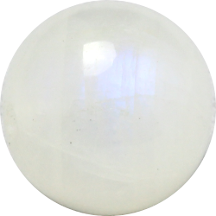
Blue Moonstone

"Blue moonstone" is a trade name for natural feldspar that shows a blue sheen; it is not a separate mineral species. GIA describes the most prized classic moonstone (orthoclase with albite layers) as colorless and nearly transparent with a vivid blue adularescence, known in the trade as "blue sheen". Material from Tanzania sold as blue moonstone in the mid-2000s was identified by the GAAJ laboratory as peristerite, a sodium-rich plagioclase feldspar, so the name alone does not tell which feldspar a stone is.

Products made with this material

Category
Category
Color
Color

Colors are read from each product’s main photo.

Bead diameter (mm)
Bead diameter (mm)

Only round beads with a verified diameter. A product matches when its stated size range overlaps yours, limits included; a material matches when any of its round sizes does.

Price (USD)
Price (USD)
Availability

Showing 1 of 1 products

Full material guide
Material facts

What the material is, where it comes from or how it is made, identification and care, from the cited sources.

Properties

Nature Natural mineral (feldspar); trade name based on the blue sheen
Mineral species Classic moonstone: orthoclase intergrown with albite (KAlSi₃O₈); Tanzanian "blue moonstone": peristerite, a plagioclase with under 10 mol% anorthite (a variety of albite, Na(AlSi₃O₈))
Refractive index Classic moonstone 1.518 to 1.526; Tanzanian peristerite 1.53 to 1.54
Specific gravity Classic moonstone 2.58; Tanzanian peristerite 2.62 to 2.63
Mohs hardness 6 to 6.5

Origins & sources

GIA illustrates light blue moonstone from Sri Lanka. In 2005 the GAAJ laboratory reported pieces of feldspar from Tanzania with blue to white iridescence, a new product called blue moonstone in the industry, which proved to be peristerite. Mindat records peristerite from many localities, for example in Ontario, Canada, and Nordland, Norway.

Identification

Classic moonstone shows adularescence, a misty light that seems to roll across the surface, and often small "centipede" inclusions. The Tanzanian peristerite sold as blue moonstone looks similar but has a slightly higher refractive index (1.53–1.54) and specific gravity (2.62–2.63), is inert under long-wave UV, shows red fluorescence under short-wave UV, and lacks centipedes; instead it shows needle-like inclusions and twin planes like labradorite. Its iridescence comes from exsolution lamellae of almost pure albite and oligoclase. Labradorite with multicolored sheen is a different material, sold as "rainbow moonstone". Telling these feldspars apart needs gemological testing.

Care

GIA's advice for moonstone: at Mohs 6 to 6.5 with poor toughness, it can be scratched, chipped or cleaved if knocked against a hard surface, so it suits pendants, earrings and brooches. Clean with warm soapy water; avoid ultrasonic and steam cleaners.

History & culture

History

The name moonstone goes back to a German name used by Werner in the late 18th century for a lustrous feldspar. In 2005 the GAAJ laboratory noted that a gem called "blue moonstone" had recently appeared on the market and showed it to be peristerite rather than classic orthoclase moonstone; peristerite is named from the Greek word for pigeon, because its sheen recalls the colors on a pigeon's neck.

Cultural meanings

Not collected yet

Traditional beliefs

Not collected yet

Sources

Collected Oct 23, 2026