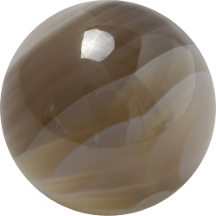
Botswana Agate
Botswana agate is a natural variety of agate (banded chalcedony, SiO₂) from Botswana, banded with fine parallel lines and often coloured pink blending into white. It is mined mainly from the Bobonong area of the Central District, where the agates form in basalt of the Karoo volcanic rocks. It is a locality variety of agate, not a separate mineral.
Bracelet works with this material
Shared designs that use at least one piece of this material. Open one to see its pieces, buy them loose or copy it into your own designs.
- Yellow Tiger's Eye, Chrysocolla, Sunstone and more From the web Pieces: 40
- Rock Crystal, Apatite, Aquamarine and more From the web Pieces: 28
- Black Onyx, Botswana Agate, Golden Aura and more From the web Pieces: 44
- Yellow Tiger's Eye, Black Onyx, Golden Aura and more From the web Pieces: 36
- Pietersite, Eagle Eye, Black Jade and more From the web Pieces: 24
- Smoky Quartz, Citrine, Coated Rainbow Quartz and more From the web Pieces: 36
- Golden Obsidian, Botswana Agate, Variscite and more From the web Pieces: 26
- Green Aventurine, Apatite, Aqua Aura Quartz (dark) and more From the web Pieces: 24
- Rock Crystal, Sea Blue Chalcedony, White Chalcedony and more From the web Pieces: 20
- Gray Moonstone, Smoky Quartz, Botswana Agate and more From the web Pieces: 28
- Rock Crystal, Vesuvianite, Bloodstone and more From the web Pieces: 38
- Pink Tiger's Eye, Smoky Quartz, Carnelian and more From the web Pieces: 30
- Malachite, Blue Aventurine, Amethyst and more From the web Pieces: 24
- River Stone, Botswana Agate and Pietersite From the web Pieces: 34
- Rose quartz, Carnelian, Onyx (white) and more From the web Pieces: 30
- Rose quartz, Smoky Quartz, Botswana Agate and more From the web Pieces: 25
- Aragonite, Black Onyx, Citrine and more From the web Pieces: 24
- Midnight Lace Obsidian, Smoky Quartz, Botswana Agate and more From the web Pieces: 30
- River Stone, Botswana Agate, Shell Pearl and more From the web Pieces: 30
- Aquamarine, Bronzite, Smoky Quartz and more From the web Pieces: 24
- Botswana Agate, Citrine, Golden Rutilated Quartz and more From the web Pieces: 25
- Botswana Agate, Gray Moonstone, Terahertz Stone and more From the web Pieces: 36
- Botswana Agate, Gray Moonstone, Terahertz Stone and more From the web Pieces: 21
- Citrine, Aquamarine, Botswana Agate and more From the web Pieces: 32
- Botswana Agate, Smoky Quartz, Queen Conch Shell and more From the web Pieces: 32
- Smoky Quartz, Black Onyx, Bloodstone and more From the web Pieces: 40
- Lapis lazuli, Kunzite, Rose Aura Quartz and more From the web Pieces: 21
- Muscovite, Botswana Agate and Sanukite From the web Pieces: 28
- Black Onyx, Hematite and Botswana Agate From the web Pieces: 38
- Black Spinel, Amethyst, Botswana Agate and more From the web Pieces: 36
- Black Spinel, Lavender Amethyst, Botswana Agate and more From the web Pieces: 36
- Black Spinel, Aquamarine, Botswana Agate and more From the web Pieces: 36
- Black Spinel, Aquamarine, Botswana Agate and more From the web Pieces: 36
- Black Spinel, Aquamarine, Botswana Agate and more From the web Pieces: 36
- Black Spinel, Bloodstone, Botswana Agate and more From the web Pieces: 36
- Black Spinel, Carnelian, Botswana Agate and more From the web Pieces: 36
- Black Spinel, Citrine, Botswana Agate and more From the web Pieces: 36
- Black Spinel, Pink Coral, Botswana Agate and more From the web Pieces: 36
- Black Spinel, Rock Crystal and Botswana Agate From the web Pieces: 36
- Black Spinel, Emerald, Botswana Agate and more From the web Pieces: 36
- Black Spinel, Garnet, Botswana Agate and more From the web Pieces: 36
- Black Spinel, Orange Garnet, Botswana Agate and more From the web Pieces: 36
- Black Spinel, Rhodolite, Botswana Agate and more From the web Pieces: 36
- Black Spinel, Iolite, Botswana Agate and more From the web Pieces: 36
- Black Spinel, Jadeite, Botswana Agate and more From the web Pieces: 36
- Black Spinel, Black Jade, Botswana Agate and more From the web Pieces: 36
- Black Spinel, Lapis lazuli, Botswana Agate and more From the web Pieces: 36
- Black Spinel, Blue Moonstone, Botswana Agate and more From the web Pieces: 36
- Black Spinel, Orange Moonstone, Botswana Agate and more From the web Pieces: 36
- Black Spinel, Black Matrix Opal, Botswana Agate and more From the web Pieces: 36
- Black Spinel, Pink Opal, Botswana Agate and more From the web Pieces: 36
- Black Spinel, Akoya Pearl, Botswana Agate and more From the web Pieces: 36
- Black Spinel, Peridot, Botswana Agate and more From the web Pieces: 36
- Black Spinel, Rose quartz, Botswana Agate and more From the web Pieces: 36
- Black Spinel, Rose quartz, Botswana Agate and more From the web Pieces: 36
- Black Spinel, Sapphire, Botswana Agate and more From the web Pieces: 36
- Black Spinel, Blue Topaz, Botswana Agate and more From the web Pieces: 36
- Black Spinel, Turquoise, Botswana Agate and more From the web Pieces: 36
- Black Spinel, Tanzanite, Botswana Agate and more From the web Pieces: 36
- Botswana Agate and Dragon Agate From the web Pieces: 44
Showing the newest 60 of 112 works. See all designs
Loose materials of this stone marked Protection
Traditional meaning: Protection
Only this stone’s materials that Pascle’s data marks with Protection are listed, not every material of the stone.
Showing 1 of 1 products