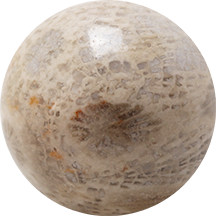
Fossil Coral
Fossil coral, as used for beads and cabochons, is ancient coral whose original calcium carbonate skeleton has been replaced or filled by silica (chalcedony, opal and quartz) over millions of years. It is therefore a natural fossil made of silica minerals, not living-coral organic material. Geologists call it silicified coral when the coral's internal structure is preserved, and agatized coral when banded chalcedony (agate) fills the space the coral left.
Bracelet works with this material
Shared designs that use at least one piece of this material. Open one to see its pieces, buy them loose or copy it into your own designs.
- Black Onyx, Botswana Agate, Golden Aura and more From the web Pieces: 44
- Hematite, Impression Stone, Quantum Quattro Silica and more From the web Pieces: 30
- Shungite, Fossil Coral, Morion and more From the web Pieces: 24
- K2 Granite, River Stone, Petrified Wood and more From the web Pieces: 24
- Mother-of-Pearl, Zeolite, White Chalcedony and more From the web Pieces: 31
- Freshwater Pearl, Larimar and Fossil Coral From the web Pieces: 22
- Morion, Quantum Quattro Silica, Mahogany Obsidian and more From the web Pieces: 26
- Eudialyte, Rock Crystal, Chrysocolla and more From the web Pieces: 40
- Rock Crystal, Lapis lazuli, Blue Tourmaline and more From the web Pieces: 19
- Aquamarine, Bronzite, Smoky Quartz and more From the web Pieces: 24
- Rock Crystal, Queen Conch Shell, Mother-of-Pearl and more From the web Pieces: 38
- Onyx (white), Howlite (magnesite), Fossil Coral and more From the web Pieces: 23
- Aquamarine, Akoya Pearl, Fossil Coral and more From the web Pieces: 25
- Rock Crystal, Black Tourmaline, Lapis lazuli and more From the web Pieces: 28
- Rock Crystal and Fossil Coral From the web Pieces: 27
- Smoky Quartz and Fossil Coral From the web Pieces: 24
- Rock Crystal, Golden Obsidian, Azurmalachite and more From the web Pieces: 34
- Rock Crystal, Fossil Coral, Vesuvianite and more From the web Pieces: 36
- Rock Crystal, Red Tiger's Eye, Rhodolite and more From the web Pieces: 29
- Aquamarine, Iolite, Fossil Coral and more From the web Pieces: 24
Loose materials of this stone marked March
Birth month: March
Only this stone’s materials that Pascle’s data marks with March are listed, not every material of the stone.
Showing 1 of 1 products