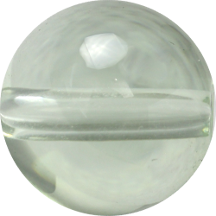
Prasiolite

Prasiolite is a green, transparent variety of quartz (SiO₂). Most prasiolite on the market is produced artificially, by heating amethyst or by irradiating and heating quartz; natural occurrences are rare. It is often sold as "green amethyst", but Mindat calls that a highly confusing and officially discouraged trade name: the stone is green quartz, not amethyst.

Bracelet works with this material

Shared designs that use at least one piece of this material. Open one to see its pieces, buy them loose or copy it into your own designs.

Loose materials of this stone marked Sagittarius

Zodiac sign: Sagittarius

Only this stone’s materials that Pascle’s data marks with Sagittarius are listed, not every material of the stone.

Category
Category
Color
Color

Colors are read from each product’s main photo; Multicolor means three or more colors.

Bead diameter (mm)
Bead diameter (mm)

Only round beads with a verified diameter. A product matches when its stated size range overlaps yours, limits included; a material matches when any of its round sizes does.

Price (USD)
Price (USD)
Availability

Showing 1 of 1 products

Full material guide
Material facts

What the material is, where it comes from or how it is made, identification and care, from the cited sources.

Properties

Nature Natural mineral (quartz); most material on the market is treated
Mineral species Quartz (variety prasiolite)
Color Pale grey-green to deep grass green (leek green)
Cause of color Iron (Fe²⁺)
Treatment Usually produced by heating amethyst, or by irradiating and heating quartz
Chemical formula SiO₂
Crystal system Trigonal
Mohs hardness 7
Specific gravity 2.65
Refractive index 1.544 to 1.553
Birefringence 0.009
Cleavage None (conchoidal fracture; brittle)
Pleochroism Very weak: light green to pale green
Luster Vitreous

Origins & sources

Prasiolite typically occurs together with amethyst and has been found in metamorphic, igneous and volcanic rocks. Natural finds have been claimed in Brazil, Canada (Thunder Bay), Namibia, Poland, Tanzania, the USA and Zambia. Well-documented occurrences include Farm Rooisand in Namibia, where it occurs with amethyst in a quartz vein, and Płóczki Górne in Lower Silesia, Poland, where olive-green prasiolite lines agate geodes. Most gem material, however, is produced artificially from amethyst or other quartz.

Identification

Prasiolite has the gemological constants of quartz: refractive index 1.544–1.553, birefringence 0.009 and specific gravity 2.65. Its colour is usually the result of heating amethyst or of combined irradiation and heating, and some crystals show zones of amethyst colour. The name "green amethyst" is misleading because the stone is not purple and is not amethyst. Mindat advises comparing prasiolite with prase and plasma, and warns not to confuse it with prasolite, a name for a chlorite-group variety.

Care

The colour of prasiolite commonly fades in sunlight, so it should not be left in strong light for long periods. Like other quartz it has no cleavage but is brittle, so protect it from hard knocks.

History & culture

History

The name prasiolite comes from Greek and means "leek-green stone". Natural prasiolite was first found in the early 19th century near Płóczki Górne in Lower Silesia, Poland.

Cultural meanings

Not collected yet

Traditional beliefs

Not collected yet

Sources

Collected Oct 23, 2026