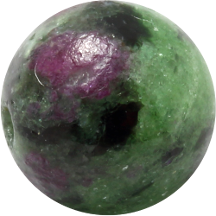
Ruby in Zoisite
Ruby in zoisite, also called anyolite, is a natural metamorphic rock rather than a single mineral: bright green chromium-bearing zoisite containing opaque purplish-red to pink ruby (corundum) crystals, often with black to very dark green amphibole (pargasite, also described as hornblende or tschermakite). It was first reported in 1954 near Longido, Tanzania, and is cut into cabochons, beads, carvings and small sculptures.
Bracelet works with this material
Shared designs that use at least one piece of this material. Open one to see its pieces, buy them loose or copy it into your own designs.
- Black Spinel, Black Matrix Opal, Rhodolite and more From the web Pieces: 34
- Ruby in Zoisite, Sodalite and Onyx (white) From the web Pieces: 48
- Lepidolite, Chrome Diopside, Green Aventurine and more From the web Pieces: 42
- Blue Fluorite, Apatite, Charoite and more From the web Pieces: 23
- Rock Crystal, Malachite, Aragonite and more From the web Pieces: 30
- Onyx (white), Amazonite, Golden Obsidian and more From the web Pieces: 30
- Ruby in Zoisite and Rock Crystal From the web Pieces: 32
- Ruby in Zoisite, Rock Crystal, Tourmalinated Quartz and more From the web Pieces: 24
- Ruby in Zoisite, Rock Crystal, Tourmalinated Quartz and more From the web Pieces: 24
- Ruby in Zoisite, Rock Crystal, Tourmalinated Quartz and more From the web Pieces: 24
- Ruby in Zoisite, Rock Crystal, Tourmalinated Quartz and more From the web Pieces: 24
- Ruby in Zoisite, Rock Crystal, Tourmalinated Quartz and more From the web Pieces: 24
- Ruby in Zoisite, Rock Crystal, Tourmalinated Quartz and more From the web Pieces: 24
- Ruby in Zoisite, Rock Crystal, Tourmalinated Quartz and more From the web Pieces: 24
- Ruby in Zoisite, Rock Crystal, Tourmalinated Quartz and more From the web Pieces: 24
- Ruby in Zoisite, Rock Crystal, Tourmalinated Quartz and more From the web Pieces: 24
- Ruby in Zoisite, Rock Crystal, Tourmalinated Quartz and more From the web Pieces: 24
- Ruby in Zoisite, Rock Crystal, Tourmalinated Quartz and more From the web Pieces: 24
- Ruby in Zoisite, Rock Crystal, Tourmalinated Quartz and more From the web Pieces: 24
- Ruby in Zoisite, Rock Crystal, Tourmalinated Quartz and more From the web Pieces: 24
- Ruby in Zoisite, Rock Crystal, Tourmalinated Quartz and more From the web Pieces: 24
- Rock Crystal, Ruby in Zoisite and Tourmalinated Quartz From the web Pieces: 24
- Rock Crystal, Ruby in Zoisite and Tourmalinated Quartz From the web Pieces: 24
- Ruby in Zoisite, Rock Crystal, Tourmalinated Quartz and more From the web Pieces: 24
- Ruby in Zoisite, Rock Crystal, Tourmalinated Quartz and more From the web Pieces: 24
- Ruby in Zoisite, Rock Crystal, Tourmalinated Quartz and more From the web Pieces: 24
- Ruby in Zoisite, Rock Crystal, Tourmalinated Quartz and more From the web Pieces: 24
- Ruby in Zoisite, Rock Crystal, Tourmalinated Quartz and more From the web Pieces: 24
- Ruby in Zoisite, Rock Crystal, Tourmalinated Quartz and more From the web Pieces: 24
- Ruby in Zoisite, Rock Crystal, Tourmalinated Quartz and more From the web Pieces: 24
- Ruby in Zoisite, Rock Crystal, Tourmalinated Quartz and more From the web Pieces: 24
- Ruby in Zoisite, Rock Crystal, Tourmalinated Quartz and more From the web Pieces: 24
- Ruby in Zoisite, Rock Crystal, Tourmalinated Quartz and more From the web Pieces: 24
- Ruby in Zoisite, Rock Crystal, Tourmalinated Quartz and more From the web Pieces: 24
- Ruby in Zoisite, Rock Crystal, Tourmalinated Quartz and more From the web Pieces: 24
- Ruby in Zoisite, Rock Crystal, Tourmalinated Quartz and more From the web Pieces: 24
- Ruby in Zoisite, Rock Crystal, Tourmalinated Quartz and more From the web Pieces: 24
- Ruby in Zoisite, Rock Crystal, Tourmalinated Quartz and more From the web Pieces: 24
- Ruby in Zoisite, Rock Crystal, Tourmalinated Quartz and more From the web Pieces: 24
- Ruby in Zoisite, Rock Crystal, Tourmalinated Quartz and more From the web Pieces: 24
- Ruby in Zoisite, Rock Crystal, Tourmalinated Quartz and more From the web Pieces: 24
- Ruby in Zoisite, Rock Crystal, Tourmalinated Quartz and more From the web Pieces: 24
- Ruby in Zoisite, Rock Crystal, Tourmalinated Quartz and more From the web Pieces: 24
- Ruby in Zoisite, Rock Crystal, Tourmalinated Quartz and more From the web Pieces: 24
- Ruby in Zoisite, Rock Crystal, Tourmalinated Quartz and more From the web Pieces: 24
- Ruby in Zoisite, Rock Crystal, Tourmalinated Quartz and more From the web Pieces: 24
- Ruby in Zoisite, Rock Crystal, Tourmalinated Quartz and more From the web Pieces: 24
- Ruby in Zoisite, Rock Crystal, Tourmalinated Quartz and more From the web Pieces: 24
- Ruby in Zoisite, Rock Crystal, Tourmalinated Quartz and more From the web Pieces: 24
- Ruby in Zoisite, Rock Crystal, Tourmalinated Quartz and more From the web Pieces: 24
- Ruby in Zoisite, Rock Crystal, Tourmalinated Quartz and more From the web Pieces: 24
- Ruby in Zoisite, Rock Crystal, Tourmalinated Quartz and more From the web Pieces: 24
- Ruby in Zoisite, Rock Crystal, Tourmalinated Quartz and more From the web Pieces: 24
- Ruby in Zoisite, Rock Crystal, Tourmalinated Quartz and more From the web Pieces: 24
- Ruby in Zoisite, Rock Crystal, Tourmalinated Quartz and more From the web Pieces: 24
- Ruby in Zoisite, Rock Crystal, Tourmalinated Quartz and more From the web Pieces: 24
Loose materials of this stone marked Goals
Traditional meaning: Goals
Only this stone’s materials that Pascle’s data marks with Goals are listed, not every material of the stone.
Showing 1 of 1 products