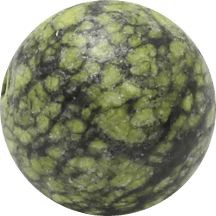
Serpentine
 is not one mineral but the name for a subgroup of natural magnesium silicate minerals, mainly antigorite, lizardite and chrysotile, which usually occur mixed together as massive rock. The name comes from the snake-like markings of serpentine rock. It is soft, usually green, and is cut into beads, cabochons and carvings. Translucent varieties such as bowenite are often used to imitate jade, but serpentine is not jade.
Bracelet works with this material
Shared designs that use at least one piece of this material. Open one to see its pieces, buy them loose or copy it into your own designs.
- Crackle Quartz, Rock Crystal, Turquoise and more From the web Pieces: 33
- Turquoise, Green Tiger's Eye, Citrine and more From the web Pieces: 34
- Jadeite, Citrine, Golden Aura and more From the web Pieces: 58
- Green Fluorite, Serpentine, Black Spinel and more From the web Pieces: 32
- Golden Rutilated Quartz, Citrine, Yellow Tiger's Eye and more From the web Pieces: 40
- Golden Rutilated Quartz, Citrine, Amazonite and more From the web Pieces: 40
- Amber, Citrine, Golden Rutilated Quartz and more From the web Pieces: 32
- Black Onyx, Hawk's Eye, Eye Agate and more From the web Pieces: 26
- Rock Crystal, Serpentine and Chrysocolla From the web Pieces: 32
- Red Tiger's Eye, Amethyst, Carnelian and more From the web Pieces: 38
- Coated Rainbow Quartz, Dragon Blood Jasper, Serpentine and more From the web Pieces: 28
- Rhodochrosite, Rose quartz, Pink Tiger's Eye and more From the web Pieces: 34
- Rock Crystal, Peridot, Serpentine and more From the web Pieces: 24
- Rock Crystal, Garnet, Blue Moonstone and more From the web Pieces: 38
- Morion, Citrine, Onyx (white) and more From the web Pieces: 20
- Purple Tiger's Eye, Citrine, Serpentine and more From the web Pieces: 42
- Golden Aura, Crackle Quartz, Pink Tiger's Eye and more From the web Pieces: 30
- Golden Obsidian, Botswana Agate, Variscite and more From the web Pieces: 26
- Jadeite, Serpentine, Peridot and more From the web Pieces: 36
- Jadeite, Coated Rainbow Quartz, Quartzite (blue) and more From the web Pieces: 39
- Golden Rutilated Quartz, Serpentine, Jadeite and more From the web Pieces: 42
- Dzi Bead, Malachite, Lapis lazuli and more From the web Pieces: 27
- Black Onyx, Serpentine, Smoky Quartz and more From the web Pieces: 42
- Black Onyx, Serpentine, Smoky Quartz and more From the web Pieces: 44
- Turquoise, Serpentine, Howlite (magnesite) and more From the web Pieces: 42
- Serpentine, Eagle Eye and Hawk's Eye From the web Pieces: 32
- Green Tiger's Eye, Serpentine, Coated Rainbow Quartz and more From the web Pieces: 40
- Amethyst, Charoite, Angel Silica and more From the web Pieces: 27
- Morion, Rock Crystal and Serpentine From the web Pieces: 30
- Serpentine, Green Tiger's Eye, Eagle Eye and more From the web Pieces: 44
- Serpentine, Dragon Blood Jasper, Azurmalachite and more From the web Pieces: 44
- Seraphinite, Golden Obsidian, Serpentine and more From the web Pieces: 24
- Dalmatian Stone, Seraphinite, K2 Granite and more From the web Pieces: 24
- Rock Crystal, Smoky Quartz, Citrine and more From the web Pieces: 42
- Black Onyx, Rock Crystal, Hematite and more From the web Pieces: 41
- Rock Crystal, Blue Goldstone, Tourmalinated Quartz and more From the web Pieces: 29
- Garnet, Rock Crystal, Yellow Tiger's Eye and more From the web Pieces: 59
- Rock Crystal, Blue Goldstone, Tourmalinated Quartz and more From the web Pieces: 30
- Serpentine, Shell Pearl, Onyx (white) and more From the web Pieces: 30
- Pink Tiger's Eye, Aqua Aura Quartz (dark), Aventurine (strawberry) and more From the web Pieces: 29
- Pink Tiger's Eye, Aqua Aura Quartz (dark), Aventurine (strawberry) and more From the web Pieces: 37
- Howlite (magnesite), Serpentine, Azurmalachite and more From the web Pieces: 26
- Morion, Eye Agate and Serpentine From the web Pieces: 36
- Crackle Quartz, Angelite, Que Sera Stone and more From the web Pieces: 22
- Black Onyx, Hematite and Serpentine From the web Pieces: 38
- Black Spinel, Amethyst, Serpentine and more From the web Pieces: 36
- Black Spinel, Lavender Amethyst, Serpentine and more From the web Pieces: 36
- Black Spinel, Aquamarine, Serpentine and more From the web Pieces: 36
- Black Spinel, Aquamarine, Serpentine and more From the web Pieces: 36
- Black Spinel, Aquamarine, Serpentine and more From the web Pieces: 36
- Black Spinel, Bloodstone, Serpentine and more From the web Pieces: 36
- Black Spinel, Carnelian, Serpentine and more From the web Pieces: 36
- Black Spinel, Citrine, Serpentine and more From the web Pieces: 36
- Black Spinel, Pink Coral, Serpentine and more From the web Pieces: 36
- Black Spinel, Rock Crystal and Serpentine From the web Pieces: 36
- Black Spinel, Emerald, Serpentine and more From the web Pieces: 36
- Black Spinel, Garnet, Serpentine and more From the web Pieces: 36
- Black Spinel, Orange Garnet, Serpentine and more From the web Pieces: 36
- Black Spinel, Rhodolite, Serpentine and more From the web Pieces: 36
- Black Spinel, Iolite, Serpentine and more From the web Pieces: 36
Showing the newest 60 of 125 works. See all designs
Loose materials of this stone marked Work
Traditional meaning: Work
Only this stone’s materials that Pascle’s data marks with Work are listed, not every material of the stone.
Showing 1 of 1 products